
What is the most common method for a software company to get clients? And if we make it a little trickier, how can software companies be relevant to people without necessarily having to sell a solution?
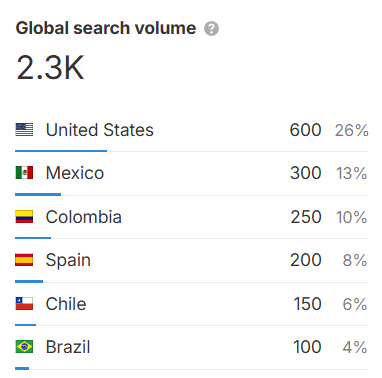
Let’s focus on companies that specifically offer inventory software. In Colombia, approximately 250 people search for “inventory software” on the internet (I say “people” to make this explanation easier). One thing I want to highlight here is that out of all the companies/people who have a business model that inevitably requires constantly rotating merchandise, they all have the problem of how to control their inventory. This is what distinguishes the people who are already looking for software to meet these needs; in other words, and to make my point clear, they are people who already know the problem and know what the immediate solution is, and in some cases, they have even defined who the provider will be before comparing or buying any system.
If I take on the task of investigating and going a step further back to focus on people who still don’t know what the problem is and much less know what the solution is, it is easy to identify that almost 7,000 people a month search for the word “inventory” on the internet. Of the 25,901 keywords related to the search, I would venture to say that they are looking for 2 main things: “what is an inventory” and “how to do it in Excel“.
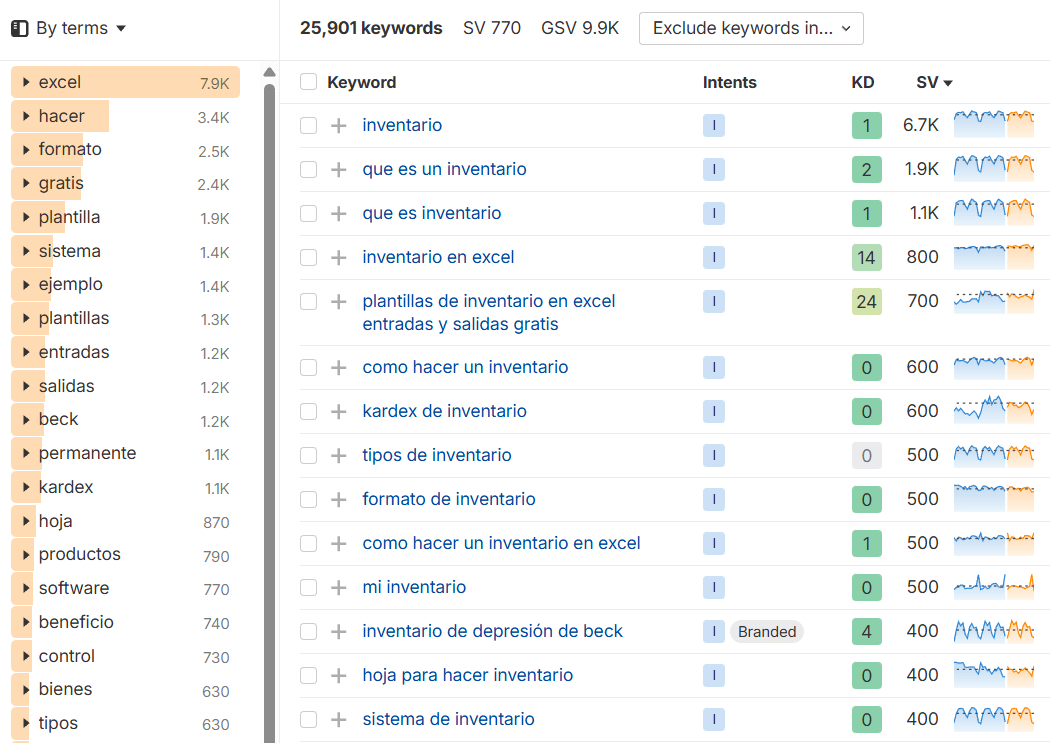
It is interesting that approximately 7,900 queries are related to Excel. And yes, Excel is a marvel and works for doing practically everything, but let’s imagine thousands of managers and business owners trying to solve a complex problem with a spreadsheet. Said in more technical terms, 30% of the searches come from people who have not identified inventory software as an immediate solution. And here you are going to argue with me saying: “Diego, but not all businesses are going to be able to pay for a system like that!” and I will debate you with the following question: “What happens with solutions or systems that are free?”. This is where the question that every business owner should ask themselves arises:
What is the opportunity cost of unmet demand?
Let’s start by saying that this sounds super mega complex for anyone who hasn’t heard it before, but it’s not. In short, I would translate it as “money you stop earning by not being where people are already searching”.
Continuing with the software industry, clients don’t buy on impulse; clients investigate, compare, and look for experts on the subject. Let’s stop believing that we can fool people.
Practical example: If your competition creates content explaining ‘How to reduce warehouse losses by 20%’ and you only have ads that say ‘Buy from me’, then I want you to ask yourself: What am I losing? Or if we look at the positive side: Where can I improve?
What I want to get at with this is that the opportunity cost here is not just losing today’s sale; it is brand positioning and even, in some cases, the possibility of raising prices and charging more for doing exactly the same thing that the competition is doing right now or will do tomorrow.
This type of thinking is what makes companies like Siigo, Alegra, Zoho, Odoo, among others, great, and at the same time allows them to cover a huge market share. And yes, I know it is important to mention that they have a ton of budget to invest and run huge advertising campaigns, but NOT EVERYTHING IS ADVERTISING! And often people even skip the ads looking for something REAL, so keep that in mind.
Question: If 70% of your potential clients today choose your competition simply because they resolved their doubts first, do you really believe your problem is a lack of advertising budget, or is it a lack of authority in your market?